



Executive Summary
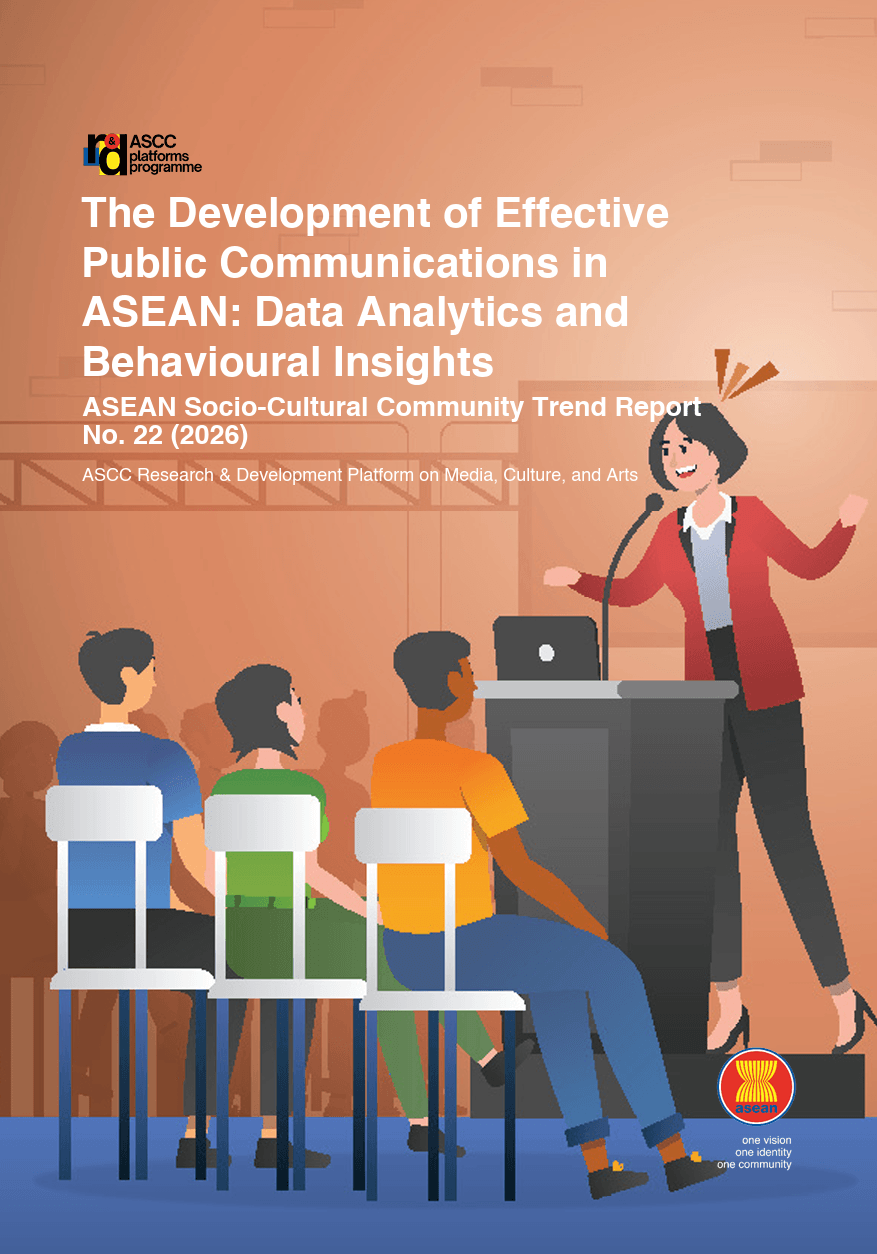
This report investigates the rapidly evolving field of public communications for the Association of Southeast Asian Nations (ASEAN), focusing on the application of data analytics and behavioural insights to enhance the strategies. It addresses the basis, current trends, actions taken by various ministries across ASEAN, case studies of successful implementation, challenges faced, and outlook for this rapidly changing field. The report is intended primarily for ASEAN Sectoral Bodies, although it will be relevant to media industry representatives, and stakeholders of ASEAN.
The report presents several key findings. Firstly, there has been a significant shift towards data-driven and behavioural insight-based communication strategies across ASEAN countries, with notable innovations in Artificial Intelligence (AI), Internet of Things, and blockchain technologies. This shift is evident across various sectors, including government communications, health, education, economic and trade bodies, environmental organizations, and disaster response.
ASEAN member states have increasingly embraced data insights and behavioural analytics to enhance public communications at the national level, while regional initiatives remain less developed. The adoption and implementation of these strategies vary among different sectors and member states, with some countries leading in specific areas. For instance, Singapore has shown advanced use of data analytics and behavioural insights in its COVID-19 communications, while Vietnam has made significant strides in e-government services. Thailand has applied data-driven strategies in its tourism revival efforts, and Indonesia has implemented innovative approaches in environmental monitoring and disaster preparedness.
Despite these advancements, persistent challenges remain. These include issues related to data privacy, digital literacy, technological infrastructure, and the digital divide. These challenges require careful navigation and policy interventions to ensure that the benefits of advanced communication strategies are equitably distributed across the diverse region.
The report emphasises the need to balance the benefits of advanced communication strategies with ethical considerations, cultural sensitivities, and inclusivity. This is particularly important given the rich political, cultural and linguistic diversity of the ASEAN region, which may necessitate localised approaches in communication strategies.
Emerging opportunities have been identified for cross-sector collaboration, regional standardisation of best practices, and the development of ASEAN-wide frameworks for data governance and digital communications. The ASEAN Secretariat, ASEAN bodies and centres, such as the ASEAN Coordinating Centre for Humanitarian Assistance on disaster management (AHA Centre) are playing significant roles in facilitating various regional efforts.
The potential for these strategies to significantly enhance public service delivery, crisis management, and citizen engagement is demonstrated by several successful case studies across the region. From Singapore’s multi-channel COVID-19 communication strategy to Indonesia’s gamified disaster preparedness app, these examples highlight the transformative potential of data-driven and behavioural insight-driven approaches.
The report concludes by emphasising the importance of continued investment in data analytics and behavioural science capabilities, the need for robust evaluation frameworks, and the value of learning from both regional experiences and global best practices. As ASEAN countries continue to develop and refine their data-driven communication strategies, addressing the identified challenges and leveraging the opportunities will be crucial while mitigating potential risks.